
June 18, 2026
The Real Cost of Tattoo No-Shows and Last-Minute Cancellations

You blocked out the whole day for it. You turned other work away to hold it. You did the consultation, drew the design, cut the stencil.
Then the morning comes and the chair stays empty. No message. No apology. Nothing.
I have heard this story from a lot of artists. It is the one that stings the most, because in tattooing a no-show is not a missed half hour. It is a missed day. That is what makes it one of the most expensive problems you deal with, and one of the easiest to underestimate.
What a no-show actually costs you
Start with your own number, not an industry average. Take what that booking was worth. A full day piece might be several hundred pounds. More, depending on what you charge.
Now add the parts that do not show up on the invoice. You said no to other clients to protect that slot, so that is work you gave away. If you rent your chair or your room, you paid for the space whether anyone sat in it or not. And the prep, the consultation, the design time, the stencil. That came out of your day too, and none of it comes back.
So a no-show is rarely one missed booking. It is the booking, plus the work you turned down, plus the hours you already spent. Counted properly, a few of these a month quietly takes a real slice out of what you earn.
Why clients ghost
Here is the part that took me a while to understand. Most no-shows are not personal.
Some people book on a wave of excitement and go cold before the date. Some are nervous about the pain, or the cost, and they avoid the conversation rather than cancel like an adult. Some just forget, especially when they booked weeks ago through a handful of messages.
The thread running through all of it is simple. The booking cost them nothing. When someone has put no money down, walking away has no consequence. The appointment feels optional to them, even though it is your whole day. That is the real problem. It is also the one you can actually do something about.
Why more reminders will not fix it
The usual first move is to send more reminders. Send them, they do help. But be honest about who they help.
A reminder works on the client who was always going to show. It nudges the forgetful one into the chair. It does nothing for the client who has already changed their mind and is quietly hoping you will not chase.
You can send three reminders and still face an empty chair, because a reminder does not ask for anything. It gives no reason to commit. For that you need something with a bit of weight behind it.
Why a deposit changes everything
This is why deposits became normal in tattooing. And it was never really about the money.
A deposit is about commitment. The moment a client puts something down, the booking stops being optional. They have skin in the game now. The flaky bookings tend to filter themselves out before they ever reach your calendar, because someone who was never serious will not pay to hold a slot. The ones who do pay are the ones who turn up.
A fair deposit is usually a portion of the session price, taken off the final cost. The client is not paying more. They are paying earlier. The amount is yours to set. What matters is that the booking now carries a consequence, and that consequence does most of the work for you.
The cancellation nobody talks about
A deposit handles the no-show. There is a second cost that it does not fully solve, and it is the quiet one.
The client cancels the night before. They had a real reason, so you do not want to be hard on them. Fair enough. But now you have a full day with nobody in it and no time to fill it. The slot is open. The trouble is, nobody knows it is open, so it just sits there empty.
This is where I see studios lose money without ever noticing. The booking was protected. The gap it left behind was not.
Filling the gap instead of swallowing it
A cancelled slot does not have to be a lost day. The clients who would take it already exist. They are the ones who messaged you months back and got told you were fully booked.
The problem is reaching them fast enough. By the time you have posted to your Stories and waited to see who bites, half the day is gone. And Stories disappear in a few hours anyway, so the people most likely to want that slot might never even see it.
A waitlist fixes this directly. Instead of shouting into the void, you keep a list of people waiting for availability, and the second a slot opens they all hear about it. First to claim it takes it. A cancellation that would have cost you a day turns into a slot filled by the afternoon.
Two things, one problem
Most artists treat no-shows, deposits and last-minute cancellations as three separate headaches. They are really one problem wearing three hats. Bookings that cost the client nothing are easy to abandon. Slots that open up are hard to refill in time.
Sort both and the empty chair becomes rare. Secure every booking with a deposit, so only committed people reach your calendar. Keep a waitlist ready, so any gap that does appear gets filled fast.
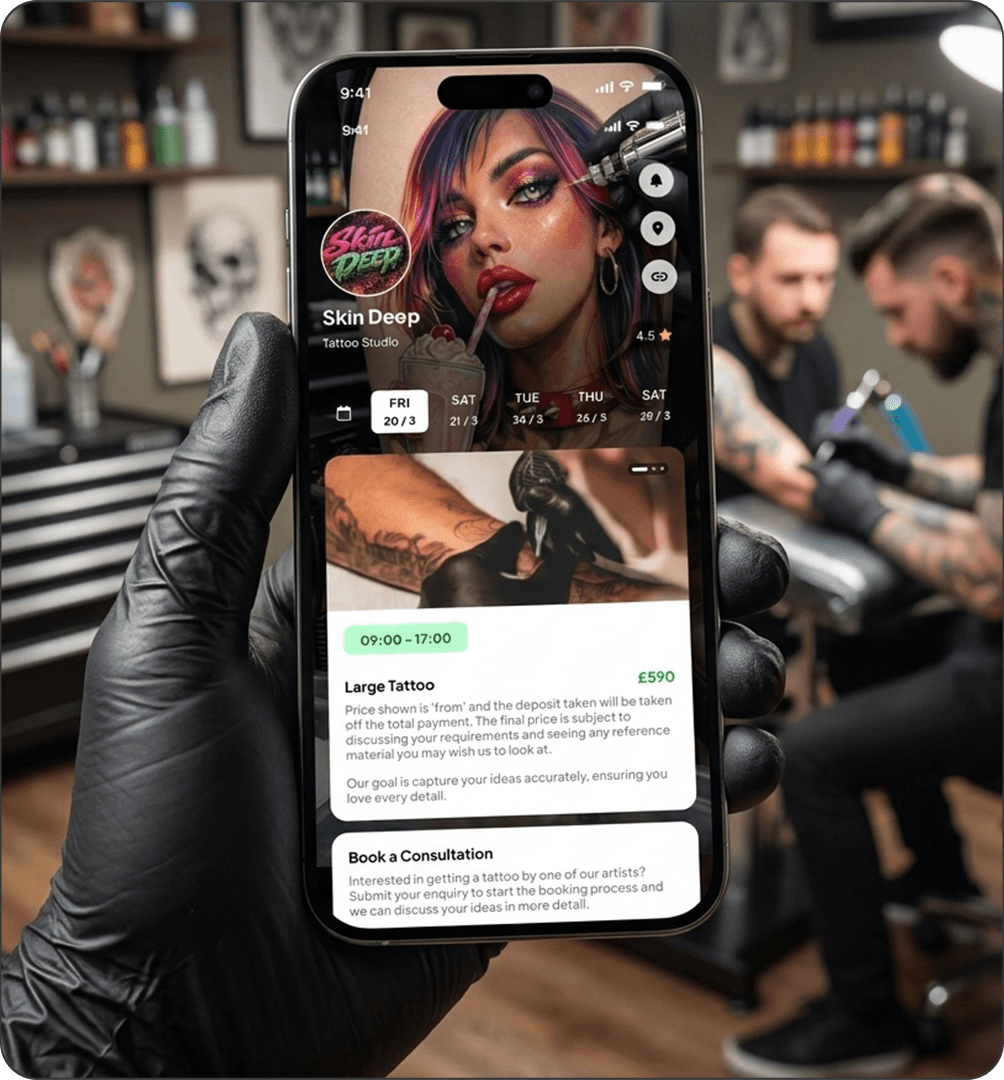
That is the whole reason I built NoSho. You share one link. Clients join your waitlist. When you post a slot, they are notified straight away. Bookings are held with a deposit through a quick checkout, and the reminders go out on their own. There is no app for your clients to download and nothing complicated to set up. It does one thing, and that is keep your chair full.
You do not need a tool to start, though. You need a deposit policy and a quick way to reach the right people. Put those two in place and the empty chair stops costing you what it does now.
FAQ
How much should a tattoo artist charge for a deposit?
Most artists take a portion of the session price and set it against the final cost, so the client pays earlier rather than extra. There is no single right number. Enough that walking away stings a little is usually enough to do the job.
Are tattoo deposits refundable?
That is your call, and the point of a deposit is partly that it is not casually refundable. A common approach is to keep it if someone no-shows or cancels late, but move it to a new date if they give you fair notice. Whatever you decide, say it clearly when you book them, so there is no argument later.
How do I handle a client who keeps cancelling?
Let the deposit do the talking. A client who is serious will not mind putting something down. One who cancels again and again after paying is rare, because the money changes how they treat the booking. If it keeps happening, you are within your rights to stop offering them slots.
Should I take a deposit from regular clients too?
You know your regulars, so use your judgement. A lot of artists keep the policy the same for everyone, because the moment you make exceptions it gets awkward to explain. Most loyal clients understand. The ones who push back hardest are often the ones the policy exists for.
What is the best way to fill a last-minute cancellation?
Reach people who already want a slot, and reach them fast. Stories are slow and they vanish. A waitlist that notifies waiting clients the instant a gap opens will refill it far quicker, often the same day.
Finished reading? Now go
fill your calendar.
Take secure deposits. Grow your waitlist.